
You have an app idea, and it already has a name. You know what the home screen looks like. You’ve built the whole thing in your head on long drives and in the shower, and you’ve been doing that for about two years.
And you haven’t told anyone. Not your partner, not your best friend, definitely not the group chat. Partly because saying it out loud makes it real, and real things can fail. Partly because you have no idea what comes after “I have an idea.”
Queen, two years is a long time to carry something this alive all by yourself. Let’s give it some daylight.
Short answer: Start with the problem, not the app. Before you hire anyone or open a single AI tool, write down who the app is for and the one thing it helps them do, tell a few of those people, and solve the problem by hand for one of them. Once you know people want it, move through product strategy, choosing the technology, designing the experience and building, in that order.
Where do I start with an app idea if I’m not technical?
When you start with an app idea and no technical background, you begin exactly where a technical person should: with the problem. Code is step five or six, not step one. Being “not technical” matters far less at the beginning than you think, because the early work is about people, not programming.
Here’s the honest truth: the idea is rarely the hard part. The hard part is knowing who will open it on a random Tuesday, what they’re trying to get done, and why the way they do it now isn’t good enough. Answer those three and you have something to build. Skip them and the most beautiful app in the world becomes a very expensive hobby.
On my AI & apps page, I lay out the path I walk people through: the idea, product strategy, choosing the technology, designing the experience, building it, AI implementation, testing and refinement, and brand and launch. Notice how much happens before “building it.” That’s on purpose.
Do I need to protect my app idea before I tell anyone?
In most early conversations, the bigger risk is silence, not theft. An idea on its own is worth very little until someone does the slow work of making it real, and that work (knowing your people, building the right first version, showing up for it) is what protects you.
There are real exceptions. If you’ve invented a genuinely new technology, or you’re about to share confidential details with a partner or investor, talk to a lawyer. (I’m not one, so treat this as practical perspective, not legal advice.) But telling three potential users “I’m thinking about building something that helps you do X” is not handing over your blueprints. Nobody’s running off with a sentence.

The Out-Loud Sequence
This is the order I’d move an idea through before anyone writes code. Each step makes the idea a little more public and a little more real. You can stop at any step if the idea tells you it’s not the one, and that’s a win too. (It just saved you a year.)
- Say it in one sentence. “It’s an app that helps [specific person] [do specific thing] without [current pain].” If it takes three sentences, you have three ideas wearing a trench coat.
- Say it to three people who have the problem. Not your mom, unless she has the problem. Ask how they handle it today, what they’ve tried and what annoys them. Then stop talking and listen.
- Solve it by hand for one person. Use what you already have: a spreadsheet, a shared note, text messages, a simple form. If people won’t use the manual version, the app version won’t save it.
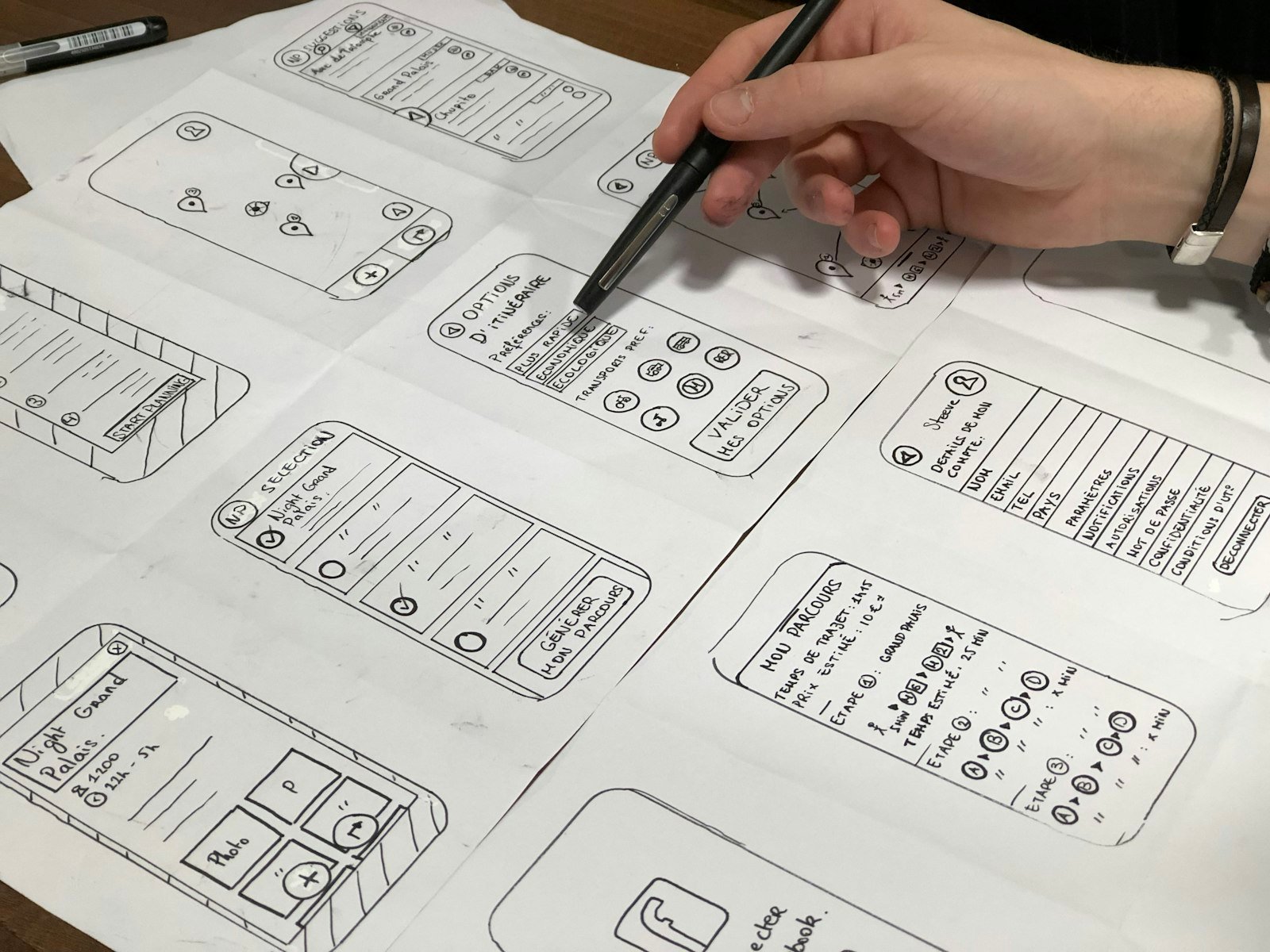
- Sketch the three screens that matter. Paper is perfect. What does someone see first, where do they do the main thing, and what do they see when it worked?
- Ask for a small yes. A waitlist sign-up, a pre-order, a paid pilot or a “yes, I’ll test it.” Interest is lovely. A small commitment is information.
Step two is the scary one, I know. I found my first five clients by cold-emailing businesses out of the phone book, so I understand exactly how much courage it takes. It gets easier after the first one.
Only after step five does “which technology should I use?” become a useful question.
How do I know if my app idea is any good?
An app idea is good when a specific group of people has a problem they already spend time, money or frustration on, and your idea makes that noticeably easier. Your excitement matters, but it isn’t the test. Their behavior is.
Signals worth paying attention to:
- They’ve built a workaround. Spreadsheets, sticky notes, three apps duct-taped together. Workarounds mean the pain is real.
- They lean in. They ask when it’ll be ready, or describe their problem in more detail than you asked for.
- They’d commit something. Not “I’d totally use that!” (everyone says that) but “can I try it?”
Signals to slow down on:
- Everyone says “cool idea” and changes the subject.
- You have to explain to them why they have the problem.
- The only person who wants it urgently is you. (Sometimes that’s fine. Just know which kind of app you’re making.)
A worked example: the practice-tracker idea
Let’s say you’re a piano teacher with 22 students. For two years you’ve imagined an app where kids log practice, parents see progress, and you stop sending “did you practice this week?” texts.
Here’s how the Out-Loud Sequence might go:
- One sentence: “An app that helps piano parents see their kid’s practice without nagging.”
- Three conversations: Two parents use a paper chart that disappears by week two. One doesn’t track at all and feels guilty about it. Everyone lights up at “without nagging.”
- By hand: For four weeks, you send 10 families a simple form link every Sunday and a two-line summary back. Eight families fill it in most weeks.
- Three screens: The kid logs practice. The parent sees the week. You see who needs encouragement.
- Small yes: You ask whether families would pay a few dollars a month for the real version. Six say yes.
Without a single line of code, you learned that the parent view matters more than the kid view, Sunday is the magic day, and “without nagging” is your whole marketing message. That’s product strategy, built with a form and some courage.
What does it take to actually build an app?
It takes all eight stages, and what surprises people most is how much thinking happens before and after the building. AI-assisted tools have made building dramatically faster. Deciding what to build, designing it well, testing it with real humans and launching it still take care.
What each stage after the idea asks of you:
- Product strategy: who it’s for, what version one does, what it deliberately doesn’t do and how it will make money.
- Choosing the technology: a no-code builder, an AI coding assistant, a custom build or a mix.
- Designing the experience: the screens, the flow and the feeling. This is where “easy” gets built in.
- Building it: whether you do it, someone helps you, or someone does it for you.
- AI implementation: only if AI has a real job in the app. Not every app needs it.
- Testing and refinement: real people, real phones, real confusion. You fix what they trip over.
- Brand and launch: a name, a look, a message and a plan for telling people.
You don’t have to master all of these. You do have to make sure each one gets covered.
Try this today (15 minutes)
Record a two-minute voice memo explaining your app to a friend who’s never heard of it. Don’t script it. Just talk.
Then play it back (or use your phone’s transcription) and write down:
- Every verb you used: track, book, remind, share, pay. These are your features.
- Every noun: practice, student, lesson, parent. These are the things your app has to store.
- The first person you mentioned. That’s probably your real user.
If your list of verbs is longer than about five, circle the one you said first. It’s usually the heart of the app. Everything else can wait for version two.
If you’d like a co-pilot from idea to launch
On my AI & apps page, there are two ways in. You can build it with me, and I’ll coach you through every stage, from the idea and product strategy to choosing the technology, building with modern AI-assisted tools, and launch. Or, if you’d rather hand it over, I can build it for you.
Either way, the goal is the same: turn the thing in your head into something real. You bring the vision you can already feel. I help translate it into screens, decisions and a plan you can actually see.
Quick answers
Where should I start with an app idea?
Start with an app idea by defining the problem, not the features. Write one sentence naming who the app is for and what it helps them do. Then talk to three people who have that problem, solve it manually for one of them and sketch the key screens. Choose technology only after you’ve confirmed people want it.
Do I need to know how to code to make an app?
No. You can make an app without coding by using no-code builders, AI coding assistants or a developer. What you do need is a clear understanding of your product: who it’s for, what it does first, what information it stores and what happens when something goes wrong. That understanding matters more than knowing code.
How do I validate an app idea without building it?
Validate an app idea by watching behavior, not collecting compliments. Talk to people who have the problem, check whether they’ve built workarounds and offer a manual version using forms, spreadsheets or messages. Then ask for a small commitment like a waitlist sign-up, pre-order or paid pilot. Real interest shows up as action.
How long does it take to build an app?
How long it takes to build an app depends on its scope, who builds it and how much testing it needs. A rough prototype can come together quickly with AI-assisted tools. A polished app that real people rely on takes longer, because strategy, design, testing and launch all need time. Smaller first versions launch sooner.
What are the stages of building an app?
The stages of building an app are the idea, product strategy, choosing the technology, designing the experience, building it, AI implementation if the app needs it, testing and refinement, and brand and launch. Most of the important decisions happen before building starts, which is why skipping strategy gets so expensive later.
Your idea has waited two years for you. You don’t have to be ready for all of it, just the next step.
So go say it out loud to someone this week. I’ll be cheering from Seattle.